FCPS Paediatrics TOACS · Wolff-Parkinson-White (WPW) Syndrome
⚡ 12-year-old with palpitations, syncope – ECG: short PR, delta wave, wide QRS – AVRT, Preexcited AF, Adenosine, Digoxin/Verapamil contraindicated, Ablation
📚 Paeds Online – paeds.online
⚕️ OBSERVED STATION · CPSP FORMAT · 8 MINUTES · SEPARATE TABS · CLINICAL SCENARIO
📖 Problem-oriented Clinical Scenario – Wolff-Parkinson-White (WPW) Syndrome
👶🏻 Clinical Scenario (read aloud – 2 min):
A 12-year-old boy presents to the emergency department with a 2-hour history of palpitations, dizziness, and mild chest discomfort. He reports that his heart “started racing suddenly” while sitting in class. He has had two similar episodes in the past 6 months, each lasting 5-10 minutes, with spontaneous resolution. There is no history of syncope, but he feels “about to faint” during the episodes. He is otherwise healthy, with no known heart disease. His father has a history of “fast heartbeats” but was never formally diagnosed.
Examination: Vital signs: HR 210 bpm, BP 105/65 mm Hg, RR 20/min, SpO2 98% on room air. He is alert, but appears anxious and pale. Cardiovascular examination reveals a regular, rapid heart rate with no murmurs. There is no hepatomegaly, no peripheral edema, and no cyanosis. Neurological examination is normal.
ECG (obtained in ED):
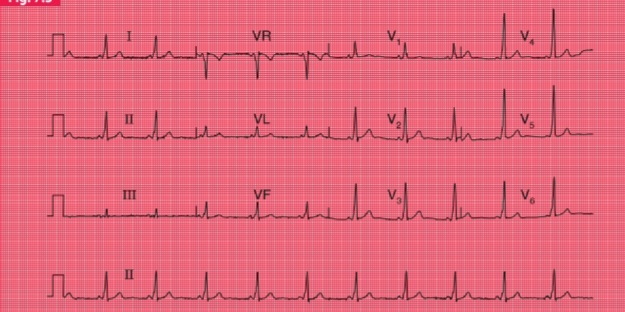 Task for the candidate: You are the pediatric cardiologist. Evaluate this child, interpret the ECG, discuss the mechanism of WPW syndrome (accessory pathway), differentiate AVRT from other SVT mechanisms, formulate an acute management plan (vagal maneuvers, adenosine, cardioversion), identify medications that are contraindicated (digoxin, verapamil), and provide counseling about long-term management, risk stratification, and catheter ablation.
A 12-year-old boy presents to the emergency department with a 2-hour history of palpitations, dizziness, and mild chest discomfort. He reports that his heart “started racing suddenly” while sitting in class. He has had two similar episodes in the past 6 months, each lasting 5-10 minutes, with spontaneous resolution. There is no history of syncope, but he feels “about to faint” during the episodes. He is otherwise healthy, with no known heart disease. His father has a history of “fast heartbeats” but was never formally diagnosed.
Examination: Vital signs: HR 210 bpm, BP 105/65 mm Hg, RR 20/min, SpO2 98% on room air. He is alert, but appears anxious and pale. Cardiovascular examination reveals a regular, rapid heart rate with no murmurs. There is no hepatomegaly, no peripheral edema, and no cyanosis. Neurological examination is normal.
ECG (obtained in ED):
Figure: ECG shows sinus rhythm with short PR interval (<0.08 sec), delta wave (slurred QRS upstroke), and QRS widening (0.12 sec). Secondary ST-T changes are present.
💡 Examiner instruction (interactive): This is a case of Wolff-Parkinson-White (WPW) Syndrome – a common cause of SVT in children, characterized by an accessory pathway (Kent bundle) that causes preexcitation on ECG (short PR, delta wave, wide QRS). The candidate must recognize the ECG pattern, understand the mechanism of orthodromic AVRT (most common), know that adenosine is first-line for acute conversion, and recognize that digoxin and verapamil are contraindicated (risk of preexcited atrial fibrillation → VF). The candidate should also discuss risk stratification (invasive EP study for symptomatic patients), indications for catheter ablation (symptomatic, syncope, high-risk pathway), and the fact that many infants outgrow WPW by 12-18 months.
🔍 Examiner Questions (interactive) – Click to reveal model answers
❓ Q1 (Examiner): “Describe the ECG findings in this child. What are the three classic features of WPW syndrome?”
✅ Candidate's answer:
• Classic ECG features of WPW (preexcitation):
1️⃣ Short PR interval – for age: <0.08 seconds in infants, <0.10 seconds in children, <0.12 seconds in adolescents.
2️⃣ Delta wave – slurred, slow upstroke of the QRS complex (due to early ventricular activation via accessory pathway).
3️⃣ Wide QRS complex – >0.08 seconds (infants) or >0.10 seconds (children/adolescents) due to fusion of impulses from AV node and accessory pathway.
4️⃣ Secondary ST-T changes – discordant to the QRS axis.
• This ECG is diagnostic of WPW syndrome. The short PR indicates early ventricular depolarization via the accessory pathway (Kent bundle). The delta wave represents the initial slow conduction through the accessory pathway before the normal AV node-His-Purkinje activation.
• Important: The presence of a delta wave does not confirm that the pathway is symptomatic – many patients have intermittent preexcitation.
• Classic ECG features of WPW (preexcitation):
1️⃣ Short PR interval – for age: <0.08 seconds in infants, <0.10 seconds in children, <0.12 seconds in adolescents.
2️⃣ Delta wave – slurred, slow upstroke of the QRS complex (due to early ventricular activation via accessory pathway).
3️⃣ Wide QRS complex – >0.08 seconds (infants) or >0.10 seconds (children/adolescents) due to fusion of impulses from AV node and accessory pathway.
4️⃣ Secondary ST-T changes – discordant to the QRS axis.
• This ECG is diagnostic of WPW syndrome. The short PR indicates early ventricular depolarization via the accessory pathway (Kent bundle). The delta wave represents the initial slow conduction through the accessory pathway before the normal AV node-His-Purkinje activation.
• Important: The presence of a delta wave does not confirm that the pathway is symptomatic – many patients have intermittent preexcitation.
❓ Q2 (Examiner): “What is the most common mechanism of SVT in patients with WPW? Explain the circuit.”
✅ Candidate's answer:
• Most common mechanism: Orthodromic AVRT (atrioventricular reentry tachycardia) – occurs in 80-90% of patients with WPW who develop SVT.
• Circuit: A reentry circuit involving:
- Anterograde (forward) limb: Normal AV node – His-Purkinje system (slow conduction, long refractory period).
- Retrograde (backward) limb: Accessory pathway (Kent bundle) – conducts from ventricle back to atrium.
- The impulse travels down the AV node (producing a narrow QRS because the ventricles are activated normally), then returns to the atrium via the accessory pathway.
• ECG during orthodromic AVRT:
- Narrow QRS tachycardia (unless aberrancy).
- P waves are usually inverted (retrograde) and occur after the QRS (RP > PR).
- Rate is typically 180-300 bpm.
• Antidromic AVRT (rare, 5-10%): Impulse travels down the accessory pathway (anterograde) and up the AV node (retrograde) → wide QRS tachycardia (preexcited).
• Most common mechanism: Orthodromic AVRT (atrioventricular reentry tachycardia) – occurs in 80-90% of patients with WPW who develop SVT.
• Circuit: A reentry circuit involving:
- Anterograde (forward) limb: Normal AV node – His-Purkinje system (slow conduction, long refractory period).
- Retrograde (backward) limb: Accessory pathway (Kent bundle) – conducts from ventricle back to atrium.
- The impulse travels down the AV node (producing a narrow QRS because the ventricles are activated normally), then returns to the atrium via the accessory pathway.
• ECG during orthodromic AVRT:
- Narrow QRS tachycardia (unless aberrancy).
- P waves are usually inverted (retrograde) and occur after the QRS (RP > PR).
- Rate is typically 180-300 bpm.
• Antidromic AVRT (rare, 5-10%): Impulse travels down the accessory pathway (anterograde) and up the AV node (retrograde) → wide QRS tachycardia (preexcited).
❓ Q3 (Examiner): “This child is hemodynamically stable. What is your acute management for SVT in WPW?”
✅ Candidate's answer:
• Step 1: Vagal maneuvers (while preparing IV access and monitoring):
- For older children: Valsalva maneuver (blow through a syringe, strain against a closed glottis) – modified Valsalva (supine to leg raise) is more effective.
- For infants: ice to the face (cover eyes, nose, and mouth with an ice bag for 15-30 seconds).
- Avoid carotid sinus massage and ocular pressure (dangerous).
• Step 2: Adenosine (if vagal maneuvers fail):
- First dose: 0.1 mg/kg rapid IV push (max 6 mg) – followed by a saline flush.
- Second dose: 0.2 mg/kg rapid IV push (max 12 mg) if no effect.
- Adenosine terminates AVRT by blocking the AV node (anterograde limb).
- Side effects: transient chest pain, flushing, dyspnea, brief asystole.
• Step 3: Alternative medications (if adenosine fails):
- Esmolol (IV beta-blocker): 500 mcg/kg over 1-2 min.
- Procainamide (IV class Ia): 15 mg/kg over 30-60 min – can be used for refractory cases.
- Amiodarone (IV class III): 5 mg/kg – reserve for unstable/refractory.
• If unstable (hypotension, poor perfusion, altered consciousness):
- Synchronized cardioversion – 0.5-1 J/kg, increase to 2 J/kg if needed.
• Step 1: Vagal maneuvers (while preparing IV access and monitoring):
- For older children: Valsalva maneuver (blow through a syringe, strain against a closed glottis) – modified Valsalva (supine to leg raise) is more effective.
- For infants: ice to the face (cover eyes, nose, and mouth with an ice bag for 15-30 seconds).
- Avoid carotid sinus massage and ocular pressure (dangerous).
• Step 2: Adenosine (if vagal maneuvers fail):
- First dose: 0.1 mg/kg rapid IV push (max 6 mg) – followed by a saline flush.
- Second dose: 0.2 mg/kg rapid IV push (max 12 mg) if no effect.
- Adenosine terminates AVRT by blocking the AV node (anterograde limb).
- Side effects: transient chest pain, flushing, dyspnea, brief asystole.
• Step 3: Alternative medications (if adenosine fails):
- Esmolol (IV beta-blocker): 500 mcg/kg over 1-2 min.
- Procainamide (IV class Ia): 15 mg/kg over 30-60 min – can be used for refractory cases.
- Amiodarone (IV class III): 5 mg/kg – reserve for unstable/refractory.
• If unstable (hypotension, poor perfusion, altered consciousness):
- Synchronized cardioversion – 0.5-1 J/kg, increase to 2 J/kg if needed.
❓ Q4 (Examiner): “Which medications are contraindicated in WPW syndrome? Why?”
✅ Candidate's answer:
• Contraindicated medications in WPW:
1️⃣ Digoxin – increases the risk of ventricular fibrillation (VF) in patients with WPW who develop atrial fibrillation. Digoxin shortens the refractory period of the accessory pathway, allowing rapid antegrade conduction → VF.
2️⃣ Verapamil (and other calcium channel blockers) – can also cause acceleration of AV nodal conduction and increase the risk of VF in preexcited AF.
3️⃣ Adenosine – contraindicated in wide complex tachycardias (if unsure, do not use).
4️⃣ Class Ia (procainamide) and Class III (amiodarone) – can be used but with caution.
• Why? In WPW, if atrial fibrillation develops, the accessory pathway may conduct rapidly (without AV node delay). Drugs that slow the AV node (digoxin, verapamil) do not affect the accessory pathway and can paradoxically increase conduction over the pathway → preexcited AF with rapid ventricular rate → VF → sudden death.
• Important: Do NOT use digoxin or verapamil in any patient with WPW (even asymptomatic) unless the accessory pathway is known to be low-risk (rarely done).
• Contraindicated medications in WPW:
1️⃣ Digoxin – increases the risk of ventricular fibrillation (VF) in patients with WPW who develop atrial fibrillation. Digoxin shortens the refractory period of the accessory pathway, allowing rapid antegrade conduction → VF.
2️⃣ Verapamil (and other calcium channel blockers) – can also cause acceleration of AV nodal conduction and increase the risk of VF in preexcited AF.
3️⃣ Adenosine – contraindicated in wide complex tachycardias (if unsure, do not use).
4️⃣ Class Ia (procainamide) and Class III (amiodarone) – can be used but with caution.
• Why? In WPW, if atrial fibrillation develops, the accessory pathway may conduct rapidly (without AV node delay). Drugs that slow the AV node (digoxin, verapamil) do not affect the accessory pathway and can paradoxically increase conduction over the pathway → preexcited AF with rapid ventricular rate → VF → sudden death.
• Important: Do NOT use digoxin or verapamil in any patient with WPW (even asymptomatic) unless the accessory pathway is known to be low-risk (rarely done).
❓ Q5 (Examiner): “A 14-year-old with WPW presents with palpitations, irregularly irregular wide QRS tachycardia, HR 280 bpm, and hypotension. What is the diagnosis and management?”
✅ Candidate's answer:
• Diagnosis: Preexcited atrial fibrillation – a life-threatening arrhythmia in WPW patients where AF conducts rapidly over the accessory pathway, producing a wide, irregular tachycardia.
• Immediate management (unstable):
- Synchronized cardioversion – 0.5-1 J/kg (or 2 J/kg if refractory). This is the treatment of choice for unstable preexcited AF.
- Sedation if time permits.
- Do NOT use: Digoxin, verapamil, adenosine (may worsen or cause VF).
- If stable, consider: Procainamide (IV) – slows conduction over the accessory pathway, or ibutilide. But cardioversion is preferred.
• If the patient progresses to VF: Defibrillation – 2 J/kg, then 4 J/kg, with CPR and epinephrine.
• Diagnosis: Preexcited atrial fibrillation – a life-threatening arrhythmia in WPW patients where AF conducts rapidly over the accessory pathway, producing a wide, irregular tachycardia.
• Immediate management (unstable):
- Synchronized cardioversion – 0.5-1 J/kg (or 2 J/kg if refractory). This is the treatment of choice for unstable preexcited AF.
- Sedation if time permits.
- Do NOT use: Digoxin, verapamil, adenosine (may worsen or cause VF).
- If stable, consider: Procainamide (IV) – slows conduction over the accessory pathway, or ibutilide. But cardioversion is preferred.
• If the patient progresses to VF: Defibrillation – 2 J/kg, then 4 J/kg, with CPR and epinephrine.
❓ Q6 (Examiner): “How do you risk-stratify a patient with WPW for sudden cardiac death?”
✅ Candidate's answer:
• High-risk features for SCD in WPW:
1️⃣ Symptomatic patients – especially with syncope, palpitations, or aborted cardiac arrest.
2️⃣ Preexcited atrial fibrillation – rapid ventricular rate (>240 bpm) during AF indicates a short refractory period of the accessory pathway → high risk.
3️⃣ Multiple accessory pathways – higher risk.
4️⃣ Ebstein anomaly – associated with multiple accessory pathways and high risk of arrhythmias.
5️⃣ Invasive EP study findings:
- Shortest preexcited RR interval (SPERRI) < 250 ms – indicates rapid conduction over accessory pathway → high risk.
- Accessory pathway effective refractory period (AP ERP) < 250 ms – high risk.
- Inducible atrial fibrillation with rapid ventricular response.
• Asymptomatic patients: Risk of SCD is very low (<0.1% per year). However, if they participate in competitive sports, EP study is recommended for risk stratification.
• Recommendation: All symptomatic patients with WPW should undergo EP study and ablation. Asymptomatic patients may be observed (especially infants, as many outgrow WPW).
• High-risk features for SCD in WPW:
1️⃣ Symptomatic patients – especially with syncope, palpitations, or aborted cardiac arrest.
2️⃣ Preexcited atrial fibrillation – rapid ventricular rate (>240 bpm) during AF indicates a short refractory period of the accessory pathway → high risk.
3️⃣ Multiple accessory pathways – higher risk.
4️⃣ Ebstein anomaly – associated with multiple accessory pathways and high risk of arrhythmias.
5️⃣ Invasive EP study findings:
- Shortest preexcited RR interval (SPERRI) < 250 ms – indicates rapid conduction over accessory pathway → high risk.
- Accessory pathway effective refractory period (AP ERP) < 250 ms – high risk.
- Inducible atrial fibrillation with rapid ventricular response.
• Asymptomatic patients: Risk of SCD is very low (<0.1% per year). However, if they participate in competitive sports, EP study is recommended for risk stratification.
• Recommendation: All symptomatic patients with WPW should undergo EP study and ablation. Asymptomatic patients may be observed (especially infants, as many outgrow WPW).
❓ Q7 (Examiner): “What is the role of catheter ablation in WPW? When is it indicated?”
✅ Candidate's answer:
• Catheter ablation is the curative treatment for WPW.
• Indications for ablation in children:
1️⃣ Symptomatic patients – with documented SVT, palpitations, or syncope.
2️⃣ High-risk accessory pathways – as identified by EP study (SPERRI < 250 ms, AP ERP < 250 ms).
3️⃣ Patients with Ebstein anomaly – high risk of multiple pathways and arrhythmias.
4️⃣ Patients who wish to participate in competitive sports – to eliminate the risk of sudden death.
5️⃣ Patients with failed medical therapy – or those who prefer ablation over lifelong medication.
6️⃣ Infants with WPW and life-threatening arrhythmias – ablation may be considered if refractory to medical therapy (though many outgrow WPW by 12-18 months).
• Success rate: >95% for typical accessory pathways. Recurrence rate ~5-10% (higher in infants/young children).
• Complications: AV block (<1%), vascular injury, pericardial effusion.
• Post-ablation: Patients can return to sports after 3 months if no recurrence.
• Catheter ablation is the curative treatment for WPW.
• Indications for ablation in children:
1️⃣ Symptomatic patients – with documented SVT, palpitations, or syncope.
2️⃣ High-risk accessory pathways – as identified by EP study (SPERRI < 250 ms, AP ERP < 250 ms).
3️⃣ Patients with Ebstein anomaly – high risk of multiple pathways and arrhythmias.
4️⃣ Patients who wish to participate in competitive sports – to eliminate the risk of sudden death.
5️⃣ Patients with failed medical therapy – or those who prefer ablation over lifelong medication.
6️⃣ Infants with WPW and life-threatening arrhythmias – ablation may be considered if refractory to medical therapy (though many outgrow WPW by 12-18 months).
• Success rate: >95% for typical accessory pathways. Recurrence rate ~5-10% (higher in infants/young children).
• Complications: AV block (<1%), vascular injury, pericardial effusion.
• Post-ablation: Patients can return to sports after 3 months if no recurrence.
❓ Q8 (Examiner): “If ablation is not an option, what medical therapy can be used for WPW? Which medications are safe?”
✅ Candidate's answer:
• Safe medications for WPW:
1️⃣ Beta-blockers – first-line medical therapy (propranolol, nadolol, atenolol).
- Propranolol: 2-4 mg/kg/day, divided TID.
- Nadolol: 1-2 mg/kg/day, once daily.
2️⃣ Class Ic antiarrhythmics – flecainide (especially useful for infants with WPW).
- Flecainide: 1-3 mg/kg/day, divided TID.
3️⃣ Class III antiarrhythmics – amiodarone or sotalol (second-line).
4️⃣ Class Ia – procainamide (IV) for acute conversion; not for chronic therapy.
• Medications to avoid: Digoxin, verapamil, diltiazem – all AV nodal blockers that can increase the risk of VF.
• Indications for medical therapy:
- Infants with frequent SVT (ablation often deferred until >15 kg).
- Patients who choose not to undergo ablation.
- Patients with asymptomatic WPW (no medication needed – just observation).
• Important: Medical therapy does not eliminate the risk of sudden death – it only treats symptoms. Ablation is the only curative option.
• Safe medications for WPW:
1️⃣ Beta-blockers – first-line medical therapy (propranolol, nadolol, atenolol).
- Propranolol: 2-4 mg/kg/day, divided TID.
- Nadolol: 1-2 mg/kg/day, once daily.
2️⃣ Class Ic antiarrhythmics – flecainide (especially useful for infants with WPW).
- Flecainide: 1-3 mg/kg/day, divided TID.
3️⃣ Class III antiarrhythmics – amiodarone or sotalol (second-line).
4️⃣ Class Ia – procainamide (IV) for acute conversion; not for chronic therapy.
• Medications to avoid: Digoxin, verapamil, diltiazem – all AV nodal blockers that can increase the risk of VF.
• Indications for medical therapy:
- Infants with frequent SVT (ablation often deferred until >15 kg).
- Patients who choose not to undergo ablation.
- Patients with asymptomatic WPW (no medication needed – just observation).
• Important: Medical therapy does not eliminate the risk of sudden death – it only treats symptoms. Ablation is the only curative option.
❓ Q9 (Examiner): “A 2-week-old infant presents with SVT and ECG shows WPW pattern. How does management differ from an adolescent?”
✅ Candidate's answer:
• Infant WPW is a different entity:
- Acute management: Vagal maneuvers (ice to face) → adenosine (0.1-0.2 mg/kg IV push). Verapamil is contraindicated in infants (<1 year) due to risk of cardiovascular collapse.
- Chronic management: Beta-blockers (propranolol) are first-line. Flecainide is also effective for infants with refractory SVT.
- Prognosis: Many infants outgrow WPW by 12-18 months – up to 50% lose preexcitation on ECG. Therefore, ablation is usually deferred unless the infant has life-threatening arrhythmias (preexcited AF, cardiac arrest).
- Indications for ablation in infants:
- Recurrent, refractory SVT despite medical therapy.
- Life-threatening arrhythmias (preexcited AF, cardiac arrest).
- Ebstein anomaly or multiple accessory pathways.
• Medication: Propranolol is started after the first episode of SVT in an infant with WPW. The dose is titrated to effect, and the infant is monitored for bradycardia and hypotension. The medication can often be weaned off by 12-18 months if the infant remains asymptomatic.
• Infant WPW is a different entity:
- Acute management: Vagal maneuvers (ice to face) → adenosine (0.1-0.2 mg/kg IV push). Verapamil is contraindicated in infants (<1 year) due to risk of cardiovascular collapse.
- Chronic management: Beta-blockers (propranolol) are first-line. Flecainide is also effective for infants with refractory SVT.
- Prognosis: Many infants outgrow WPW by 12-18 months – up to 50% lose preexcitation on ECG. Therefore, ablation is usually deferred unless the infant has life-threatening arrhythmias (preexcited AF, cardiac arrest).
- Indications for ablation in infants:
- Recurrent, refractory SVT despite medical therapy.
- Life-threatening arrhythmias (preexcited AF, cardiac arrest).
- Ebstein anomaly or multiple accessory pathways.
• Medication: Propranolol is started after the first episode of SVT in an infant with WPW. The dose is titrated to effect, and the infant is monitored for bradycardia and hypotension. The medication can often be weaned off by 12-18 months if the infant remains asymptomatic.
❓ Q10 (Examiner): “This child's father has 'fast heartbeats.' What is the inheritance of WPW? Should family members be screened?”
✅ Candidate's answer:
• Inheritance: Most WPW cases are sporadic, but familial WPW exists and is inherited in an autosomal dominant pattern with variable penetrance. Mutations in PRKAG2 and MYH6 have been associated with familial WPW.
• Family screening:
- First-degree relatives of a patient with WPW should undergo ECG screening (especially if the patient has a family history of WPW or sudden death).
- If an asymptomatic relative has WPW on ECG, further evaluation (Holter, EP study) is recommended if they participate in competitive sports or have symptoms.
- Asymptomatic family members with no ECG findings do not need further screening unless they develop symptoms.
• Genetic testing: Not routinely performed unless there is a strong family history of WPW or PRKAG2 syndrome (WPW + HCM + conduction disease).
• Inheritance: Most WPW cases are sporadic, but familial WPW exists and is inherited in an autosomal dominant pattern with variable penetrance. Mutations in PRKAG2 and MYH6 have been associated with familial WPW.
• Family screening:
- First-degree relatives of a patient with WPW should undergo ECG screening (especially if the patient has a family history of WPW or sudden death).
- If an asymptomatic relative has WPW on ECG, further evaluation (Holter, EP study) is recommended if they participate in competitive sports or have symptoms.
- Asymptomatic family members with no ECG findings do not need further screening unless they develop symptoms.
• Genetic testing: Not routinely performed unless there is a strong family history of WPW or PRKAG2 syndrome (WPW + HCM + conduction disease).
❓ Q11 (Examiner): “Can this child participate in competitive sports? What are the AHA/ACC guidelines?”
✅ Candidate's answer:
• AHA/ACC guidelines for WPW and sports:
- Symptomatic WPW patients: Should undergo catheter ablation before participating in competitive sports. After successful ablation, patients can return to sports after 3-6 months (if no arrhythmia recurrence).
- Asymptomatic WPW patients: Can participate in sports if:
- They undergo an invasive EP study that demonstrates a low-risk accessory pathway (SPERRI >250 ms, AP ERP >250 ms, no inducible AF).
- Or they choose to undergo ablation before sports.
- High-risk activities: Competitive sports (basketball, soccer, football, swimming) are high-risk and should be avoided until risk stratification or ablation is completed.
- Low-risk activities: Moderate exercise (jogging, walking, bowling) may be allowed.
• Recommendation for this child: Since he has symptoms (palpitations, near-syncope), he should not participate in competitive sports until he undergoes EP study and ablation. After successful ablation, he can return to sports.
• AHA/ACC guidelines for WPW and sports:
- Symptomatic WPW patients: Should undergo catheter ablation before participating in competitive sports. After successful ablation, patients can return to sports after 3-6 months (if no arrhythmia recurrence).
- Asymptomatic WPW patients: Can participate in sports if:
- They undergo an invasive EP study that demonstrates a low-risk accessory pathway (SPERRI >250 ms, AP ERP >250 ms, no inducible AF).
- Or they choose to undergo ablation before sports.
- High-risk activities: Competitive sports (basketball, soccer, football, swimming) are high-risk and should be avoided until risk stratification or ablation is completed.
- Low-risk activities: Moderate exercise (jogging, walking, bowling) may be allowed.
• Recommendation for this child: Since he has symptoms (palpitations, near-syncope), he should not participate in competitive sports until he undergoes EP study and ablation. After successful ablation, he can return to sports.
❓ Q12 (Examiner): “What is PRKAG2 syndrome? How does it relate to WPW?”
✅ Candidate's answer:
• PRKAG2 syndrome is a rare autosomal dominant glycogen storage disorder caused by mutations in the PRKAG2 gene (AMP-activated protein kinase).
• Clinical features:
- WPW syndrome – almost universal.
- Hypertrophic cardiomyopathy (HCM) – progressive left ventricular hypertrophy.
- Conduction system disease – progressive AV block, atrial fibrillation, ventricular arrhythmias.
- Heart failure and sudden death risk.
• Management:
- WPW: Ablation may be more challenging due to multiple or broad accessory pathways.
- HCM: Beta-blockers, ICD for high-risk patients.
- Conduction disease: Pacemaker for AV block.
- Prognosis is worse than isolated WPW; patients often require ICD and pacemaker.
• Key difference from isolated WPW: PRKAG2 patients have associated HCM, progressive conduction disease, and higher risk of sudden death.
• PRKAG2 syndrome is a rare autosomal dominant glycogen storage disorder caused by mutations in the PRKAG2 gene (AMP-activated protein kinase).
• Clinical features:
- WPW syndrome – almost universal.
- Hypertrophic cardiomyopathy (HCM) – progressive left ventricular hypertrophy.
- Conduction system disease – progressive AV block, atrial fibrillation, ventricular arrhythmias.
- Heart failure and sudden death risk.
• Management:
- WPW: Ablation may be more challenging due to multiple or broad accessory pathways.
- HCM: Beta-blockers, ICD for high-risk patients.
- Conduction disease: Pacemaker for AV block.
- Prognosis is worse than isolated WPW; patients often require ICD and pacemaker.
• Key difference from isolated WPW: PRKAG2 patients have associated HCM, progressive conduction disease, and higher risk of sudden death.
❓ Q13 (Examiner): “What is the association between Ebstein anomaly and WPW? How does this affect management?”
✅ Candidate's answer:
• Ebstein anomaly is a congenital heart defect characterized by downward displacement of the tricuspid valve into the right ventricle.
• Association with WPW: Up to 30% of patients with Ebstein anomaly have WPW – due to the presence of multiple accessory pathways (often right-sided).
• Clinical implications:
- High risk of recurrent SVT and preexcited atrial fibrillation.
- Risk of sudden cardiac death is higher than in isolated WPW.
• Management:
- Catheter ablation is the treatment of choice – but may be more complex due to multiple pathways.
- Medical therapy: Beta-blockers, flecainide.
- Avoid digoxin and verapamil.
- ICD placement may be needed for high-risk patients.
- Transition: Lifelong follow-up with a cardiologist experienced in adult congenital heart disease.
• Ebstein anomaly is a congenital heart defect characterized by downward displacement of the tricuspid valve into the right ventricle.
• Association with WPW: Up to 30% of patients with Ebstein anomaly have WPW – due to the presence of multiple accessory pathways (often right-sided).
• Clinical implications:
- High risk of recurrent SVT and preexcited atrial fibrillation.
- Risk of sudden cardiac death is higher than in isolated WPW.
• Management:
- Catheter ablation is the treatment of choice – but may be more complex due to multiple pathways.
- Medical therapy: Beta-blockers, flecainide.
- Avoid digoxin and verapamil.
- ICD placement may be needed for high-risk patients.
- Transition: Lifelong follow-up with a cardiologist experienced in adult congenital heart disease.
❓ Q14 (Examiner): “The parents are very anxious about the risk of sudden death. How will you counsel them?”
✅ Candidate's structured answer:
• “Your child has a condition called Wolff-Parkinson-White syndrome – it is caused by an extra electrical pathway in the heart that can sometimes cause a fast heart rhythm called SVT.”
• “The good news is that we have very effective treatments. We can stop the fast heart rhythm when it happens using medications or a procedure called cardioversion.”
• “In the long term, we have a curative procedure called catheter ablation – a small tube is inserted through the leg into the heart, and the extra pathway is precisely burned away. Success is >95%, and your child will be able to live a normal life afterward.”
• “There is a small risk of sudden death, but this risk is very low – especially with proper treatment. We will assess your child's risk and, if needed, place a small device (ICD) to protect against dangerous rhythms.”
• “Your child will need to avoid competitive sports until we have risk-stratified him or performed ablation. After treatment, he can return to normal activities.”
• “We will also screen other family members (you and his siblings) with an ECG because this condition can run in families. We will support you every step of the way.”
• “Your child has a condition called Wolff-Parkinson-White syndrome – it is caused by an extra electrical pathway in the heart that can sometimes cause a fast heart rhythm called SVT.”
• “The good news is that we have very effective treatments. We can stop the fast heart rhythm when it happens using medications or a procedure called cardioversion.”
• “In the long term, we have a curative procedure called catheter ablation – a small tube is inserted through the leg into the heart, and the extra pathway is precisely burned away. Success is >95%, and your child will be able to live a normal life afterward.”
• “There is a small risk of sudden death, but this risk is very low – especially with proper treatment. We will assess your child's risk and, if needed, place a small device (ICD) to protect against dangerous rhythms.”
• “Your child will need to avoid competitive sports until we have risk-stratified him or performed ablation. After treatment, he can return to normal activities.”
• “We will also screen other family members (you and his siblings) with an ECG because this condition can run in families. We will support you every step of the way.”
🗣️ Examiner's probing / high-yield points (Wolff-Parkinson-White Syndrome):
• "What are the three classic ECG features of WPW?" → Short PR, delta wave, wide QRS.
• "What is the most common mechanism of SVT in WPW?" → Orthodromic AVRT (narrow QRS).
• "Which medications are contraindicated in WPW?" → Digoxin and verapamil (risk of VF).
• "What is the treatment of choice for preexcited atrial fibrillation?" → Synchronized cardioversion.
• "What is the curative treatment for WPW?" → Catheter ablation (success >95%).
• "When should an asymptomatic patient with WPW undergo ablation?" → If they participate in competitive sports or have high-risk features on EP study.
• "What is PRKAG2 syndrome?" → WPW + HCM + conduction disease (glycogen storage).
• "What is the association between Ebstein anomaly and WPW?" → Multiple accessory pathways, high risk of arrhythmias.
• "What are the three classic ECG features of WPW?" → Short PR, delta wave, wide QRS.
• "What is the most common mechanism of SVT in WPW?" → Orthodromic AVRT (narrow QRS).
• "Which medications are contraindicated in WPW?" → Digoxin and verapamil (risk of VF).
• "What is the treatment of choice for preexcited atrial fibrillation?" → Synchronized cardioversion.
• "What is the curative treatment for WPW?" → Catheter ablation (success >95%).
• "When should an asymptomatic patient with WPW undergo ablation?" → If they participate in competitive sports or have high-risk features on EP study.
• "What is PRKAG2 syndrome?" → WPW + HCM + conduction disease (glycogen storage).
• "What is the association between Ebstein anomaly and WPW?" → Multiple accessory pathways, high risk of arrhythmias.
📘 Wolff-Parkinson-White (WPW) Syndrome – Core Revision for TOACS
⚡ Definition
Preexcitation syndrome caused by an accessory pathway (Kent bundle) connecting atrium to ventricle. ECG: short PR, delta wave, wide QRS. Most common cause of SVT in children.
Preexcitation syndrome caused by an accessory pathway (Kent bundle) connecting atrium to ventricle. ECG: short PR, delta wave, wide QRS. Most common cause of SVT in children.
🔍 Mechanisms
Orthodromic AVRT (narrow QRS) – most common (80-90%). Antidromic AVRT (wide QRS) – 5-10%. Atrial fibrillation with preexcitation – life-threatening.
Orthodromic AVRT (narrow QRS) – most common (80-90%). Antidromic AVRT (wide QRS) – 5-10%. Atrial fibrillation with preexcitation – life-threatening.
💊 Acute Management
Vagal maneuvers → Adenosine (0.1-0.2 mg/kg IV). Unstable (hypotension, preexcited AF) → synchronized cardioversion. Avoid digoxin, verapamil.
Vagal maneuvers → Adenosine (0.1-0.2 mg/kg IV). Unstable (hypotension, preexcited AF) → synchronized cardioversion. Avoid digoxin, verapamil.
📈 Chronic Management
Beta-blockers (propranolol) first-line. Flecainide for refractory cases. Catheter ablation – curative (success >95%). Infants often outgrow by 12-18 months.
Beta-blockers (propranolol) first-line. Flecainide for refractory cases. Catheter ablation – curative (success >95%). Infants often outgrow by 12-18 months.
⚠️ Risk Stratification
High-risk: syncope, preexcited AF, SPERRI <250 ms (EP study). Low-risk: asymptomatic, no high-risk features. EP study for symptomatic patients.
High-risk: syncope, preexcited AF, SPERRI <250 ms (EP study). Low-risk: asymptomatic, no high-risk features. EP study for symptomatic patients.
🧬 Syndromic WPW
PRKAG2: WPW + HCM + conduction disease. Ebstein anomaly: WPW + multiple pathways + high risk. Familial WPW: autosomal dominant (MYH6, PRKAG2).
PRKAG2: WPW + HCM + conduction disease. Ebstein anomaly: WPW + multiple pathways + high risk. Familial WPW: autosomal dominant (MYH6, PRKAG2).
⭐ High-yield pearls for TOACS (Wolff-Parkinson-White Syndrome):
• ECG: Short PR + Delta wave + Wide QRS.
• Most common SVT mechanism: Orthodromic AVRT (narrow QRS).
• Adenosine is first-line for acute SVT (stable).
• Digoxin and verapamil are CONTRAINDICATED in WPW.
• Preexcited AF: Wide, irregular, rapid → cardioversion (NOT digoxin/verapamil).
• Catheter ablation is curative (success >95%).
• Many infants outgrow WPW by 12-18 months.
• PRKAG2: WPW + HCM + conduction disease.
• Ebstein anomaly: WPW + multiple accessory pathways.
• ECG: Short PR + Delta wave + Wide QRS.
• Most common SVT mechanism: Orthodromic AVRT (narrow QRS).
• Adenosine is first-line for acute SVT (stable).
• Digoxin and verapamil are CONTRAINDICATED in WPW.
• Preexcited AF: Wide, irregular, rapid → cardioversion (NOT digoxin/verapamil).
• Catheter ablation is curative (success >95%).
• Many infants outgrow WPW by 12-18 months.
• PRKAG2: WPW + HCM + conduction disease.
• Ebstein anomaly: WPW + multiple accessory pathways.
🗣️ Candidate's role-play & examiner feedback
💬 To the candidate (role‑play): You will be asked the 14 questions from the Examiner Q&A tab. This station tests knowledge of WPW syndrome – ECG interpretation (short PR, delta wave, wide QRS), mechanisms (orthodromic AVRT), acute management (vagal maneuvers, adenosine, cardioversion), contraindicated medications (digoxin, verapamil), risk stratification (syncope, EP study, SPERRI), catheter ablation (indications, success rates), and syndromic associations (PRKAG2, Ebstein). Provide empathetic counseling to parents about prognosis, sports restrictions, and family screening.
📝 Examiner Marking Grid (Wolff-Parkinson-White Syndrome – TOACS station):
- ✅ Interprets ECG: short PR, delta wave, wide QRS (WPW)
- ✅ Describes orthodromic AVRT mechanism (AV node anterograde, accessory pathway retrograde)
- ✅ Lists acute management: vagal maneuvers → adenosine (0.1-0.2 mg/kg IV)
- ✅ States that digoxin and verapamil are contraindicated (risk of VF)
- ✅ Recognizes preexcited AF (wide, irregular, rapid) and treats with cardioversion
- ✅ Discusses risk stratification: symptomatic patients need EP study; SPERRI <250 ms = high risk
- ✅ States catheter ablation is curative (success >95%)
- ✅ Explains that infants often outgrow WPW by 12-18 months
- ✅ Discusses syndromic WPW: PRKAG2 (WPW + HCM + conduction) and Ebstein anomaly
- ✅ Counsels about sports restrictions and family screening (ECG for first-degree relatives)
📚 Key references: Nelson Textbook of Pediatrics 22e (Chapter 484.3 – Supraventricular Tachycardia), AHA/ACC/HRS Guidelines for WPW, Pediatric EP Society recommendations.