🎯 TOACS FCPS Station · Abnormal Movements in Dystonia
📷 Clinical Photograph – Dystonia Posture
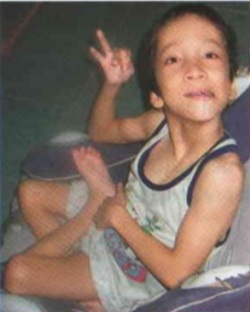
🔍 Key clinical features:
- ✓ Sustained muscle contractions – leading to twisting and repetitive movements
- ✓ Abnormal postures – often painful and progressive
- ✓ May be focal, segmental, or generalized – involvement of one or multiple body regions
- ✓ Worsened with action – often task-specific (e.g., writer's cramp)
- ✓ Diurnal variation – symptoms worse at end of day (dopa-responsive dystonia)
📋 Clinical scenario (examiner prompt)
A 7‑year‑old girl is brought to the neurology clinic with a progressive gait abnormality that started in the left foot and has now spread to her leg and trunk over the past 6 months. The movements are worse in the evening and improve after a nap. On examination, the child has dystonic posturing of the left leg, foot inversion, and truncal twisting that is exacerbated by walking. There is no weakness or sensory loss. The child has a normal MRI brain.
🧑⚕️ Examiner tasks · TOACS
1. Identify the diagnosis from the clinical image and context.
2. Describe the clinical features (dystonic posturing, diurnal variation, progression, gait abnormality).
3. Explain the underlying condition (dopa-responsive dystonia, DYT5, GCH1 mutation).
4. Discuss diagnosis and management (levodopa trial, response, genetic testing, treatment).
🎯 Expected answers (for examiners)
- • Diagnosis: Dopa-responsive dystonia (DYT5, Segawa syndrome)
- • Clinical features: Childhood onset (typically 4-8 years); dystonia starting in a lower limb (gait abnormality, foot inversion); diurnal fluctuation (worse at end of day, improves with sleep); progressive to generalized dystonia; normal cognition; normal brain MRI
- • Genetics: GCH1 mutation (autosomal dominant, GTP cyclohydrolase 1 deficiency) → BH4 deficiency → dopamine deficiency; also THAP1 (DYT6), TOR1A (DYT1)
- • Diagnostic test: Trial of carbidopa-levodopa (1-2 mg/kg/day) – dramatic and sustained response confirms; genetic testing for GCH1
- • Treatment: Carbidopa-levodopa (dose titrated to response); trihexyphenidyl for adjunctive; DBS for refractory generalized dystonia
• Onset: Childhood (4-8 years), often lower limb
• Diurnal variation: Worse evening, improves with sleep
• Dramatic response to levodopa – low doses (1-2 mg/kg/day)
• Gene: GCH1 (GTP cyclohydrolase 1)
• Mechanism: BH4 deficiency → dopamine deficiency
• Must be ruled out in all childhood dystonia
⚡ Quick FCPS‑style MCQ
A 7-year-old with progressive dystonia starting in the left foot, worse in the evening, and improving with sleep. The most appropriate next step is:
A. Deep brain stimulation B. Trial of carbidopa-levodopa C. Botulinum toxin injections D. Trihexyphenidyl📌 Topic summary · Abnormal Movements in Dystonia
Sustained twisting movements
Levodopa trial mandatory
Botulinum toxin
Trihexyphenidyl → DBS
Kayser-Fleischer rings
Eye-of-the-tiger sign
| Feature | Dopa-Responsive Dystonia (DYT5) | DYT1 Dystonia |
|---|---|---|
| Gene | GCH1 | TOR1A |
| Onset | Childhood (4-8 years) | Childhood (leg often first) |
| Diurnal variation | Yes (worse evening) | No |
| Response to levodopa | Dramatic (low dose) | No |
| Treatment | Carbidopa-levodopa | Trihexyphenidyl, DBS |