🩻 TOACS FCPS Station · Chest X-ray in Cleidocranial Dysplasia
📷 Chest X-ray – Cleidocranial Dysplasia
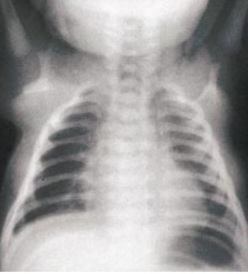
🔍 Key radiographic features:
- ✓ Hypoplastic or absent clavicles – partial or complete absence
- ✓ Widened thorax – due to absent clavicular support
- ✓ Delayed ossification – of pubic symphysis, fontanelles
- ✓ Wormian bones – intrasutural bones (skull)
- ✓ Shoulders can be approximated – midline opposition possible
📋 Clinical scenario (examiner prompt)
A 1‑month‑old infant is referred for evaluation of unusual shoulder mobility. On examination, the anterior fontanelle is wide open. . A chest X‑ray (see image) shows absence of both clavicles and a widened thorax. .
🧑⚕️ Examiner tasks · TOACS
1. Identify the diagnosis from the clinical image and context.
2. Describe the radiographic findings (hypoplastic/absent clavicles, widened thorax).
3. Explain the underlying condition (cleidocranial dysplasia, RUNX2 mutation).
4. Discuss management (dental, orthopedic, genetic counseling).
🎯 Expected answers (for examiners)
- • Diagnosis: Cleidocranial dysplasia (RUNX2)
- • Radiographic findings: Hypoplastic or completely absent clavicles (unilateral or bilateral); widened thorax; delayed closure of sutures/fontanelles; wormian bones (skull); delayed ossification of pubic symphysis; short stature
- • Clinical features: Open anterior fontanelle (may persist into adulthood); supernumerary teeth (hyperdontia); delayed eruption of permanent teeth; ability to bring shoulders together in front of chest; short stature; mild intellectual disability (in some); recurrent otitis media; hearing loss
- • Genetics: RUNX2 gene (chromosome 6p21); autosomal dominant; transcription factor essential for osteoblast differentiation
- • Management: Dental: extraction of supernumerary teeth, orthodontic treatment, dental prostheses; ENT: hearing screening (otitis media); orthopedic: treat fractures, monitor for scoliosis; genetic counseling (autosomal dominant, 50% recurrence risk)
• Gene: RUNX2 (transcription factor)
• Clavicles: Hypoplastic/absent → shoulders meet midline
• Skull: Patent fontanelles, wormian bones, delayed suture closure
• Teeth: Supernumerary teeth (hyperdontia), delayed eruption
• Inheritance: Autosomal dominant
• Management: Dental extraction, orthodontics, ENT monitoring
⚡ Quick FCPS‑style MCQ
A child with open fontanelles, supernumerary teeth, and a chest X-ray showing absent clavicles. The most likely diagnosis is:
A. Campomelic dysplasia B. Cleidocranial dysplasia C. Nail-patella syndrome D. Leri-Weill dyschondrosteosis📌 Topic summary · Chest X-ray in Cleidocranial Dysplasia
Cleidocranial dysplasia (CCD)
RUNX2 (autosomal dominant)
Hypoplastic/absent clavicles
Open fontanelles, supernumerary teeth
Dental extraction, orthodontics, ENT
Normal intelligence (usually)
| Feature | Cleidocranial Dysplasia |
|---|---|
| Gene | RUNX2 (runt-related transcription factor 2) – 6p21 |
| Inheritance | Autosomal dominant (most de novo) |
| Chest X-ray findings | Hypoplastic or absent clavicles (unilateral or bilateral); widened thorax; delayed ossification |
| Skull findings | Patent anterior fontanelle (may persist into adulthood); wormian bones; delayed suture closure; brachycephaly |
| Dental findings | Supernumerary teeth (hyperdontia), delayed eruption of permanent teeth, retained primary teeth |
| Other features | Short stature (proportionate); shoulders can be opposed midline; recurrent otitis media; hearing loss; mild intellectual disability (rare); pubic symphysis diastasis |
| Management – Dental | Extraction of supernumerary teeth, orthodontic treatment, dental prostheses |
| Management – ENT | Hearing screening (otitis media), consider tympanostomy tubes |
| Management – Other | Genetic counseling (50% recurrence risk); monitor for scoliosis; treat fractures |