🩺 TOACS FCPS Station · Bullous Rash in Junctional Epidermolysis Bullosa
📷 Clinical Photograph – Bullous Rash (JEB)
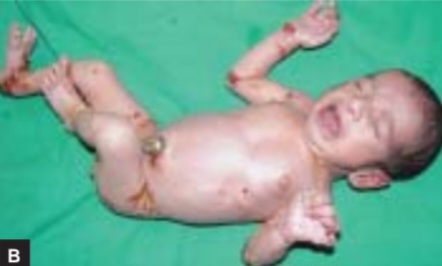
🔍 Key clinical features:
- ✓ Widespread tense bullae – at birth or early infancy
- ✓ Erosions and crusted lesions – painful, slow to heal
- ✓ Mucosal involvement – oral, esophageal, genitourinary
- ✓ Nail dystrophy and loss – frequent finding
- ✓ Enamel hypoplasia – characteristic of JEB (shiny, pitted teeth)
📋 Clinical scenario (examiner prompt)
A 2‑day‑old neonate is transferred to the NICU for widespread skin blistering that began at birth. The lesions include tense bullae and large erosions on the trunk, extremities, and oral mucosa. The baby has bilateral ear cartilage blisters and nail dystrophy. The mother reports no family history of skin disease. The infant is febrile and appears ill. On examination, Nikolsky sign is positive, and there are erosions on the palate and buccal mucosa.
🧑⚕️ Examiner tasks · TOACS
1. Identify the diagnosis from the clinical image and context.
2. Describe the clinical features (widespread bullae, mucosal involvement, nail dystrophy, enamel hypoplasia).
3. Explain the underlying condition (junctional epidermolysis bullosa, laminin-332 deficiency).
4. Discuss diagnosis and management (skin biopsy, immunofluorescence, genetic testing, wound care, nutrition).
🎯 Expected answers (for examiners)
- • Diagnosis: Junctional epidermolysis bullosa (JEB)
- • Clinical features: Widespread tense bullae and erosions at birth; mucosal involvement (oral, esophageal, genitourinary); nail dystrophy/loss; ear cartilage blisters; enamel hypoplasia (pitted, discolored teeth); positive Nikolsky sign; may have hoarse cry, dysphagia, failure to thrive
- • Pathogenesis: Mutations in genes encoding laminin-332 (LAMA3, LAMB3, LAMC2) or collagen XVII (COL17A1); cleavage at lamina lucida; defective anchoring filaments
- • Diagnosis: Skin biopsy with immunofluorescence mapping (antigen mapping) and electron microscopy; genetic testing (LAMA3, LAMB3, LAMC2, COL17A1)
- • Management: Wound care (non-adherent dressings, silver sulfadiazine, petrolatum), pain control (opioids, non-pharmacological), nutritional support (NG/feeding tube, gastrostomy), prevention of infection (topical/systemic antibiotics), dental care, multidisciplinary approach (dermatology, gastroenterology, nutrition, social work)
- • Prognosis: Severe JEB (generalized severe) has high mortality in first year of life (sepsis, failure to thrive, respiratory complications)
• Level of split: Lamina lucida (intra-lamina lucida)
• Genes: LAMA3, LAMB3, LAMC2, COL17A1
• Key protein: Laminin-332 (laminin 5), collagen XVII
• Enamel hypoplasia: Highly characteristic of JEB
• Prognosis: Severe form often fatal in infancy
• Management: Supportive, wound care, nutrition, infection control
⚡ Quick FCPS‑style MCQ
A neonate with widespread bullae, mucosal involvement, nail dystrophy, and enamel hypoplasia. The most likely diagnosis is:
A. Epidermolysis bullosa simplex (EBS) B. Junctional epidermolysis bullosa (JEB) C. Dystrophic epidermolysis bullosa (DEB) D. Kindler syndrome📌 Topic summary · Bullous Rash in Junctional EB
Junctional EB (JEB)
Lamina lucida
LAMA3, LAMB3, LAMC2, COL17A1
Laminin-332
Widespread bullae, mucosal, enamel hypoplasia
Often fatal in infancy
| Feature | Junctional EB (JEB) | EBS | DEB |
|---|---|---|---|
| Level of split | Lamina lucida | Intraepidermal (basal layer) | Sublamina densa (dermis) |
| Genes | LAMA3, LAMB3, LAMC2, COL17A1 | KRT5, KRT14 | COL7A1 |
| Key protein | Laminin-332 | Keratin 5/14 | Collagen VII |
| Mucosal involvement | Yes (common, severe) | Rare (mild) | Yes (common) |
| Nail dystrophy | Yes | Rare | Yes (severe) |
| Enamel hypoplasia | Yes (characteristic) | No | No |
| Inheritance | AR | AD (most) | AD (dominant) or AR |
| Prognosis | Often fatal in infancy (severe) | Good (mild) | Variable (severe in recessive) |